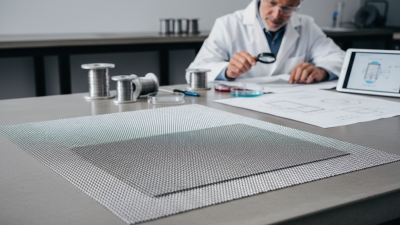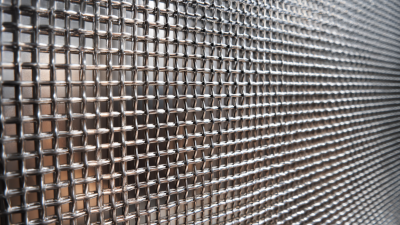
Choosing reliable China top stainless steel mesh screen suppliers requires more than comparing prices online. Product photographs rarely reveal wire tension, aperture accuracy, or edge quality. A dependable supplier should explain these details clearly and provide measurable specifications. Buyers should examine mesh count, wire diameter, material grade, roll width, and surface finish. Common options include 304 and 316 stainless steel, but the correct choice depends on corrosion exposure and operating conditions. The details matter.
This guide introduces practical ways to assess Chinese manufacturers and trading companies. It considers production experience, inspection procedures, export communication, and after-sales support. Strong suppliers usually share factory information, sample policies, test reports, and traceable material records. They should also clarify weaving methods, tolerances, packaging, and delivery schedules before accepting an order. Ask for samples.
A small sample can reveal uneven openings, broken wires, or rough cut edges. It may also expose weaknesses that a polished catalog hides. Independent inspection can add confidence for larger purchases, especially when the mesh supports filtration, screening, construction, or industrial processing. Still, certificates should not be accepted without checking their scope and validity. Some supplier claims sound impressive but remain incomplete.
The following outline compares important supplier-selection criteria, product capabilities, and communication practices. It aims to help readers make careful decisions based on evidence rather than assumptions. China has many capable manufacturers, yet quality varies between factories and production batches. That reality deserves attention. A reliable stainless steel mesh screen supplier should welcome technical questions, admit practical limitations, and demonstrate consistency through documented performance.
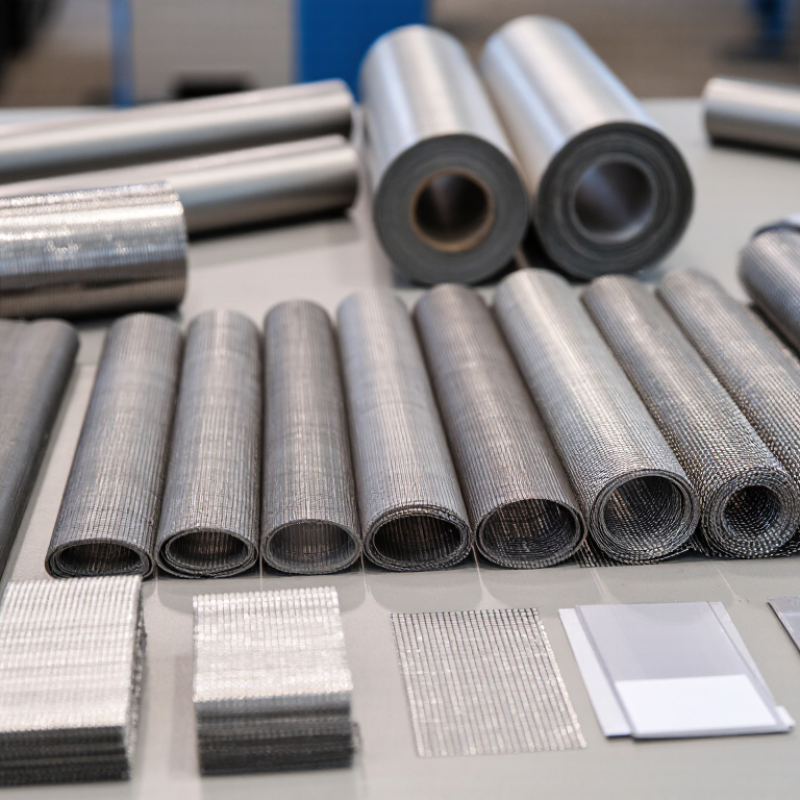
A stainless steel mesh screen is a woven or welded grid made from corrosion-resistant steel wire. It separates particles, supports filtration, or protects openings while allowing air and liquid to pass. Its performance depends on mesh count, wire diameter, aperture size, weave pattern, and alloy grade. A 100-mesh screen has about 100 openings per linear inch, but the actual opening changes with wire thickness. This detail matters.
Common grades include 304 stainless steel for general industrial use and 316 stainless steel for saltwater, chemical, or humid environments. Plain weave offers balanced strength and filtration. Dutch weave provides stronger support for fine filtration. Welded mesh usually holds its shape better under mechanical stress.
In practical inspection, I check the aperture with calibrated gauges, not by sight alone. Small errors can affect flow and particle retention.
The International Stainless Steel Forum reported global stainless crude steel production of about 58.4 million metric tons in 2023. This large material base supports steady demand for wire mesh across processing, construction, and laboratory applications. A 2024 market report from Grand View Research also identified corrosion resistance and industrial filtration as major stainless steel demand factors.
Still, selecting a screen by mesh count alone is incomplete. Temperature, pressure, cleaning chemicals, and edge treatment deserve equal attention. I have seen screens fail early because the frame corroded first. The mesh was not always the weak point.
China’s stainless steel mesh supplier landscape is easier to assess by capability, not website size. World Stainless reported 58.4 million tonnes of global crude stainless steel production in 2023. That scale supports many Chinese factories, but volume alone proves little about mesh consistency. A supplier may be a mesh manufacturer, weaving workshop, downstream converter, or export trader. Volume is not proof.
Classify manufacturers by process control. Check whether they draw wire, weave, weld, cut, and test in-house. Ask for aperture tolerance, wire-diameter records, surface-finish standards, and batch traceability. ISO 9044 offers a useful reference for industrial woven wire cloth. ASTM E11 may apply to laboratory test sieves. Request a recent inspection report, not a generic certificate. Photos should show measuring tools, edge treatment, and packaging labels. Small details matter.
Classify suppliers again by application expertise. Food filtration, chemical processing, mining, and architectural screening need different alloys and opening patterns. A 316L recommendation should include corrosion conditions, temperature, and cleaning methods. Otherwise, it is only sales language. UN Comtrade trade data can show export activity, but it cannot confirm weaving quality. Supplier comparisons remain imperfect; a polished catalog can hide subcontracting or unstable tension. Samples reveal weaknesses. A paid sample, dimensional check, and repeat-batch test provide stronger evidence than promises.
How to Classify Stainless Steel Mesh Screen Suppliers in China
Stainless steel mesh screen suppliers can be classified by the opening size they manufacture and supply. Coarse screening commonly uses larger openings, while filtration and separation applications require finer openings. The reference values below correspond to commonly used ASTM E11 sieve openings and are shown without company or brand rankings.
Buyers comparing China’s stainless steel mesh suppliers should compare standards before prices.
ISO 9044 defines requirements for industrial woven wire cloth, including aperture, wire diameter, and inspection methods. ASTM E2016 also supports consistent terminology for wire cloth openings. Ask suppliers for measured aperture reports, not only catalogue values.
Material selection changes performance.
Grade 304 suits many indoor and general industrial applications. Grade 316 or 316L offers better resistance in chloride-rich, coastal, and chemical environments. However, “316” alone is not enough. Request chemical composition records, mill certificates, and evidence of heat treatment when relevant.
ASTM A580 covers stainless steel wire, while ASTM A240 covers stainless steel plate and sheet used in some mesh products. The standard must match the product form.
Look closely at weaving quality.
Uneven openings, loose edges, and dark weld marks can indicate weak process control. A supplier should provide mesh count, wire diameter, roll width, tensile data, and sampling rules.
The World Stainless Association reported 58.4 million tonnes of stainless crude steel production in 2023, showing the scale of the supply chain, but production volume does not guarantee mesh quality. It is a useful context, not proof.
I would also verify corrosion resistance with an application-specific test. Salt spray results can mislead. They do not perfectly represent real seawater exposure.
A cheaper screen may fail early. That lesson is easy to overlook.
Choosing among China’s top stainless steel mesh screen suppliers requires more than comparing prices. Quality begins with the alloy grade, wire diameter, opening size, and weaving accuracy. Request mill certificates and verify the material through independent testing when the application is critical. Small differences matter. A 0.05-millimeter opening error can affect filtration performance.
Ask for production samples, not only photographs. Inspect the mesh under bright light for broken wires, uneven tension, and rough edges. Check roll length, width tolerance, surface finish, and packaging protection. A reliable supplier should explain inspection points and provide batch traceability.
My own early evaluations focused too heavily on appearance. That was a mistake.
Customization should cover aperture, wire thickness, edge treatment, roll size, cut panels, and welded frames. Share drawings with clear tolerances and application details. Confirm whether prototypes are made on regular equipment or special tooling.
Production capacity requires practical evidence. Review monthly output, machine numbers, shift arrangements, material stock, and realistic lead times. Ask how urgent orders affect existing schedules. A confident answer includes limits, not promises.
During factory discussions, I would also compare sample quality from different batches, because one excellent piece proves little. Reliable cooperation grows from records, testing, and honest technical communication.
China Top Stainless Steel Mesh Screen Suppliers?
Before choosing a Chinese supplier, verify production evidence rather than relying on polished catalog images. The World Stainless 2024 statistics report recorded about 58.4 million tonnes of stainless steel production in 2023. China represented roughly 63% of global output. Large capacity does not guarantee accurate mesh. Ask for mill certificates, wire diameter records, aperture measurements, and recent batch photos.
Check whether the factory controls weaving, welding, edge finishing, and packing in-house. Request a live video inspection of the loom floor. Confirm the stainless grade through a material test report, preferably linked to the actual heat number. For filtration screens, compare opening tolerance, tensile strength, and pressure performance with the required standard. ISO 9001 certification helps, but it does not replace product inspection. I once treated a certificate as proof of consistency. That was careless.
Tips: Send a clear drawing, not only a product name. Require a pre-shipment sample and an independent inspection clause. Use ITC Trade Map or UN Comtrade data to compare HS-code shipment patterns, but read the data carefully; classifications can be imperfect. Check payment details, export experience, packaging photos, and response times. A reliable supplier should explain variations openly. Silence is information. Also test corrosion resistance when the screen faces salt, chemicals, or outdoor moisture. A low quotation may hide thinner wire, wider apertures, or weaker welds. Ask for a written tolerance table before ordering.
| Check Dimension | What to Verify | Recommended Evidence | Practical Benchmark or Reference | Warning Signs |
|---|---|---|---|---|
| Material Grade | Confirm whether the mesh is made from 304, 304L, 316, or 316L stainless steel and whether the stated grade matches the application. | Material test certificate, heat number, chemical composition report, and independent verification when required. | 304 is widely used for general corrosion resistance; 316/316L is generally selected for chloride-containing, marine, or more demanding environments. | Only a grade name is provided without traceability or supporting test documentation. |
| Applicable Standard | Check which standard governs wire cloth terminology, dimensional tolerances, material, inspection, and acceptance criteria. | Quotation and inspection plan that clearly identify the applicable standard and revision. | ISO 9044 is commonly used for industrial woven wire cloth; ASTM E2016 provides terminology and classifications for industrial woven wire cloth. | The supplier uses vague terms such as “international standard” without naming a specific document. |
| Mesh Count and Aperture | Verify mesh count, wire diameter, nominal aperture, open area, and the measurement direction for warp and weft. | Technical drawing, sample measurement report, calibrated microscope or optical measurement record. | Aperture and wire diameter must be assessed together; two meshes with the same nominal mesh count can have different open areas. | The quotation lists only “mesh number” and omits wire diameter or aperture tolerance. |
| Wire Diameter | Confirm nominal wire diameter, tolerance, measuring locations, and whether the supplied wire is round and consistently drawn. | Incoming material records, calibrated micrometer readings, and a batch inspection report. | Wire diameter should be checked at multiple points because it directly affects aperture, open area, strength, and pressure drop. | Measurements are reported from one location only or are supplied without instrument details. |
| Weave Pattern | Confirm plain weave, twill weave, Dutch weave, or another specified construction, including the warp and weft arrangement. | Annotated drawing, product sample, and production specification sheet. | Plain weave is common for general filtration and screening; twill and Dutch constructions are used when finer filtration or increased mechanical stability is required. | The supplier substitutes a different weave without written approval. |
| Surface Finish and Cleanliness | Inspect for oil, scale, embedded particles, broken wires, burrs, discoloration, and contamination from handling or packaging. | Close-up photographs, cleanliness requirements, sample approval, and pre-shipment inspection report. | The mesh should be free from visible defects that could affect filtration, corrosion resistance, hygiene, or safe handling. | Photos show heavy oil residue, sharp loose ends, rust staining, or inconsistent surface appearance. |
| Dimensional Accuracy | Verify roll width, roll length, flatness, squareness, cut size, and edge condition against the approved drawing. | Dimensional inspection report using calibrated tape measures, gauges, or other suitable instruments. | All tolerances should be agreed in writing before production because acceptable limits vary by specification, mesh type, and end use. | The supplier confirms dimensions verbally but does not provide a controlled drawing. |
| Mechanical Performance | Assess tensile strength, joint stability, flexibility, and resistance to deformation during installation and service. | Material test report, production inspection records, and application-specific performance testing. | Mechanical requirements should be linked to wire diameter, weave type, panel size, load, vibration, and operating temperature. | The supplier guarantees “high strength” without defining a test method or acceptance value. |
| Corrosion and Temperature Suitability | Review exposure to chlorides, acids, alkalis, humidity, cleaning chemicals, and operating temperature. | Application review, chemical compatibility statement, and test data when the environment is severe. | Stainless steel grade selection should be based on the actual chemical and thermal environment; no grade is universally corrosion-proof. | The supplier promises corrosion resistance without asking about process chemicals or service conditions. |
| Quality Management | Check whether incoming materials, weaving, cutting, packing, nonconformities, and corrective actions are controlled. | Quality manual, process flow, inspection plan, calibration records, and relevant certification subject to verification. | A documented quality system should define responsibilities, inspection frequency, records, and handling of nonconforming products. | Certificates are presented as images only, contain inconsistent details, or cannot be independently verified. |
| Sample Approval | Compare the production batch with an approved sample for material, aperture, wire diameter, weave, finish, and dimensions. | Signed sample approval record, retained reference sample, and batch comparison checklist. | A representative sample should be approved before mass production, especially for custom mesh or tight filtration requirements. | The supplier asks for approval based only on catalog photographs. |
| Traceability | Ensure each shipment can be traced to the raw-material heat, production date, machine or line, inspection record, and packing unit. | Batch number, coil or roll identification, packing list, material certificate, and inspection report. | Traceability records should remain consistent across labels, certificates, inspection reports, and shipping documents. | Labels are missing, duplicated, handwritten inconsistently, or unrelated to the test documents. |
| Packaging and Export Readiness | Confirm moisture protection, edge protection, roll or panel support, labeling, carton strength, and container loading method. | Packaging specification, photographs before dispatch, packing list, and agreed shipping marks. | Packaging should prevent corrosion, crushing, telescoping, deformation, and accidental damage during international transport. | Mesh is loosely packed, exposed to moisture, or shipped without clear identification. |
| Inspection Before Shipment | Define inspection scope, sampling level, test instruments, acceptance criteria, and responsibility for inspection costs. | Pre-shipment inspection report, photographs, measurement records, and independent inspection option. | Inspection should be completed before final payment or dispatch when the order value or technical risk is significant. | The supplier refuses reasonable inspection or provides only a generic certificate of conformity. |
| Commercial and After-Sales Terms | Review lead time, minimum order quantity, payment terms, Incoterms, replacement policy, claims procedure, and spare or repeat-order consistency. | Signed quotation, technical annex, purchase contract, warranty terms, and written nonconformity procedure. | Technical specifications and quality criteria should be part of the contract rather than relying on informal messages or verbal promises. | The lowest price is offered with unclear specifications, unusually broad promises, or no documented remedy for defects. |