
China Top 10 Powder Pressing Machine Manufacturers?

China’s powder equipment sector includes many established manufacturers, yet choosing a reliable supplier requires more than comparing catalog prices. This guide examines China’s leading Powder Pressing Machine manufacturers through practical, technical, and commercial criteria. It focuses on equipment quality, production experience, engineering capability, and documented customer support.

A dependable manufacturer should explain pressing force, mold dimensions, cycle speed, powder compatibility, and automation options clearly. Factory evidence matters. Look for finished machines, control cabinets, hydraulic systems, and test samples during a video inspection or site visit. Ask for material certificates, dimensional records, performance data, and maintenance instructions. These details reveal whether a supplier understands real production conditions.

Safety remains essential.

The selected companies should demonstrate appropriate quality systems, traceable components, electrical protection, emergency controls, and export documentation. Their machines may serve ceramic, refractory, metal-powder, magnetic, or other legitimate industrial applications. However, a polished website cannot replace verified results. Buyers should request sample pressing trials and compare density, strength, cycle stability, and tooling wear. After-sales response also deserves careful attention, especially when production depends on hydraulic seals, sensors, or programmable controls.

No ranking is permanently perfect. Factory capabilities change, and public information may remain incomplete. Therefore, this overview should support further verification rather than replace it. Pricing, lead time, installation, training, spare parts, and long-term operating costs all influence the final decision. A manufacturer that communicates limitations honestly may prove more dependable than one making impressive but unsupported promises.
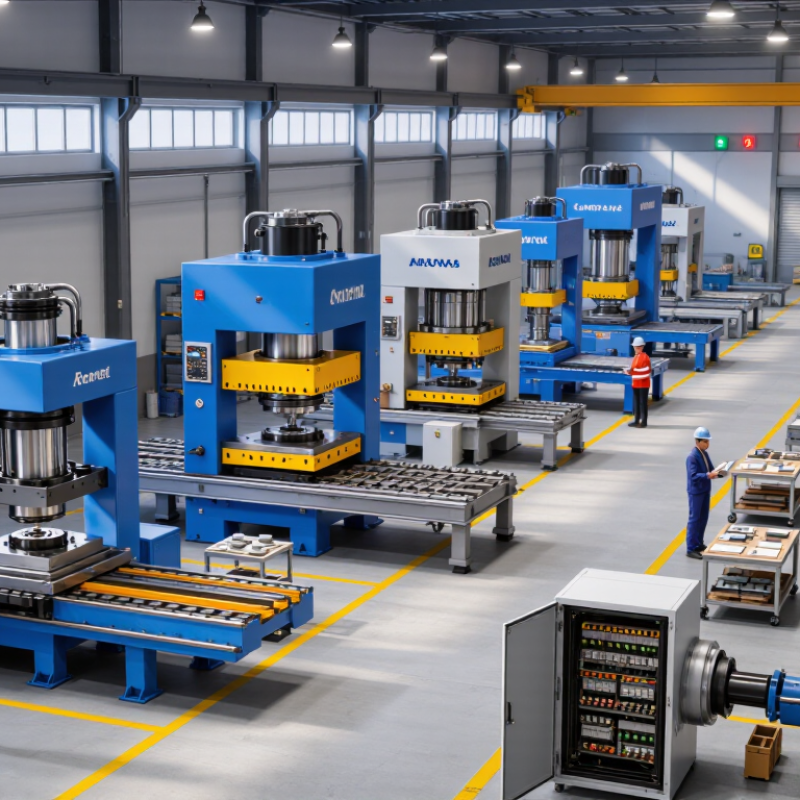
China Top 10 Powder Pressing Machine Manufacturers?

What Is a Powder Pressing Machine?

What Is a Powder Pressing Machine?

A powder pressing machine forms loose powder into a dense, shaped component. It uses a die, punches, and controlled pressure. The powder fills the die cavity, then the upper punch compresses it. After pressing, the lower punch ejects the compacted part.

Simple idea. Precise control matters.

These machines may use mechanical, hydraulic, or servo-driven systems. Operators adjust filling depth, pressing force, dwell time, and ejection speed. These settings influence density, strength, dimensions, and surface quality. Common materials include ceramics, metal powders, graphite, ferrite, and other engineered compounds. The correct machine depends on powder behavior, component size, required output, and acceptable tolerances.

A practical production lesson is that higher pressure does not always create better parts. Excessive force can damage tooling or cause cracks during ejection. Powder moisture, particle size, and uneven filling can also create hidden density differences. Quality checks should include weight, dimensions, visual inspection, and occasional density testing. Dust extraction and guarding are essential around moving tooling. Maintenance teams should inspect punches, dies, lubrication systems, and pressure sensors regularly. Even experienced operators can overlook small changes in powder flow. That is where careful records help. Not every defect has an obvious cause.

China Top 10 Powder Pressing Machine Manufacturers? - What Is a Powder Pressing Machine?

A practical, brand-neutral comparison of the key technical dimensions used to evaluate powder pressing machines and manufacturers.

No. Evaluation Dimension Typical Industry Range or Description Why It Matters Recommended Verification Point
1 Machine Type Mechanical, hydraulic, rotary, or hybrid powder compaction press The machine structure affects production speed, force control, tooling flexibility, and maintenance requirements. Match the machine type with the powder, part geometry, required output, and allowable production cycle.
2 Nominal Pressing Force Common industrial systems range from approximately 50 kN to more than 2,000 kN; laboratory presses may be smaller. Higher force capacity supports larger parts, higher compaction pressure, and denser powder products. Confirm rated force, usable force at the required stroke, and the permitted continuous-duty load.
3 Pressing Pressure Many powder-compaction applications operate around 100–1,000 MPa, depending on material and product design. Pressure directly influences green density, dimensional stability, strength, and defect formation. Review the pressure calculation method, pressure uniformity, and material-specific test results.
4 Production Capacity Output may range from several parts per minute for complex products to hundreds of parts per minute for simple rotary-pressed parts. Actual productivity depends on tooling cavities, filling time, ejection, inspection, and material handling. Request a cycle-time test using the intended powder and production tooling rather than relying only on rated speed.
5 Maximum Product Size Determined by die diameter, filling depth, maximum tablet or component height, and available daylight. A machine may have sufficient force but still be unsuitable if its die space or stroke cannot accommodate the part. Check die-table dimensions, maximum tooling envelope, stroke length, and ejection distance.
6 Material Compatibility Used for ceramic powders, powdered metals, hard metals, graphite, magnetic materials, pharmaceutical powders, and other formulated compounds. Flowability, particle size, moisture, lubricants, abrasiveness, and compressibility vary significantly between powders. Conduct trials with the actual powder and evaluate filling consistency, sticking, cracking, and ejection behavior.
7 Density and Force Control Advanced presses may use servo control, closed-loop hydraulic control, multi-level filling, and independent punch adjustment. Controlled force and displacement improve density distribution and reduce variation between batches. Verify sensor resolution, repeatability, data logging, and the number of independently controlled axes.
8 Automation and Control System Typical features include PLC control, touchscreen operation, recipe storage, alarm history, automatic lubrication, and production data recording. Automation improves repeatability, operator safety, changeover efficiency, and traceability. Confirm interface language, remote diagnostics, data-export format, cybersecurity controls, and spare-part availability.
9 Safety and Compliance Important provisions include guarding, emergency stops, interlocks, overload protection, dust control, and documented risk assessment. Powder dust and high mechanical forces create operational hazards if the machine is not properly protected. Request applicable conformity documents, safety-circuit information, electrical schematics, and user manuals.
10 Service, Tooling, and Total Cost Total ownership cost includes the press, dies and punches, installation, training, maintenance, utilities, spare parts, and downtime. A lower purchase price may be offset by higher tooling costs, longer service response, or limited technical support. Compare warranty terms, commissioning scope, tooling life, response time, consumables, and estimated five-year operating cost.
Note: The ranges shown are representative industry guidelines, not guaranteed specifications for every machine. Final suitability should be confirmed through a material trial, tooling review, and documented acceptance test.

How Powder Pressing Machines Work

How Powder Pressing Machines Work

Powder pressing machines convert loose powder into consistent shapes through controlled pressure. The process begins when powder enters a precision die. A lower punch supports the material while an upper punch moves downward. Pressure rearranges particles, removes air, and creates a compact form.

Many machines use pre-compression before the main pressing stage. This reduces trapped air and helps prevent cracks or edge damage. Sensors monitor pressing force, punch position, and production speed. These measurements support stable density across each piece. After compression, the lower punch rises and gently ejects the compact. Tool alignment matters greatly. Even a small gap can cause uneven walls or surface defects. In my view, powder behavior is often underestimated. Moisture, particle size, and flowability can change the result within hours.

Tips: Keep powder moisture within a tested range. Check die wear regularly. Adjust filling depth before increasing pressure. Excessive force may improve density but damage the tooling. Test several samples from different production times. One sample is never enough. Operators should record force curves, ejection resistance, and visible defects. These records help compare equipment and assess manufacturers more objectively. A reliable supplier should explain calibration, tooling life, maintenance access, and quality inspection methods. Ask for practical data, not only polished specifications. Performance can look excellent during a short demonstration, yet become inconsistent during longer production runs.

Key Factors for Evaluating Chinese Manufacturers

China Top 10 Powder Pressing Machine Manufacturers?

When evaluating Chinese powder pressing machine manufacturers, start with process evidence, not attractive brochures. Ask for test results using your actual powder, moisture range, particle size, and target density. A reliable supplier should explain pressure curves, filling accuracy, cycle time, and tooling limits in clear technical language.

Factory experience matters. Inspect machining areas, assembly benches, electrical cabinets, and final inspection records. Look for calibrated pressure sensors, guarded moving parts, stable wiring, and traceable component records. Request samples from several production batches. One perfect sample proves little. It may reflect careful preparation rather than normal performance.

Supplier verification should include installation support, operator training, spare-part availability, and response times. Ask for a written acceptance test with measurable limits for weight variation, dimensional accuracy, noise, and emergency-stop function. Independent certifications can help, but verify their scope and validity. Speak with recent customers about downtime, maintenance access, and communication after payment. A weakness may be honest. Hidden weakness is more expensive. Compare total operating cost, not only the machine quotation. A lower price can conceal fragile tooling, difficult software, or long replacement delays. Review manuals before ordering; unclear instructions often predict difficult commissioning.

China’s Top 10 Powder Pressing Machine Manufacturers

China’s Top 10 Powder Pressing Machine Manufacturers

China’s top 10 powder pressing machine manufacturers are better judged by evidence than advertising. A credible supplier should show production records, inspection procedures, and repeatable test results. During equipment evaluations, I look closely at frame rigidity, die alignment, feeding consistency, and pressure stability. Small deviations can create visible cracks, uneven density, or costly material waste.

Strong manufacturers usually provide pilot pressing, sample analysis, and process guidance before signing an order. Ask for data on tablet weight variation, compression accuracy, cycle speed, noise, and energy use. Service matters too. Clear manuals, spare-part availability, remote diagnostics, and technician training can reduce downtime. Factory experience is visible in practical details, such as protected wiring, easy-clean surfaces, and safe access around moving parts.

The top ten should not be treated as a permanent ranking. Product requirements change, and a supplier that fits ceramic powder may not suit metal, chemical, or construction materials. I would also question unusually high output claims without test conditions. They may reflect ideal settings, not daily production. One weakness remains common: documentation can be less precise than the machine itself. Buyers should request independent verification, trial samples, and written performance limits before making a decision.

This chart presents representative pressing-force classes commonly used when evaluating powder pressing machines in China. It focuses on machine capability rather than company or brand performance. Higher pressing force is generally associated with larger components, greater compaction density, and more demanding powder metallurgy applications.

How to Select the Right Manufacturer for Your Needs

China Top 10 Powder Pressing Machine Manufacturers? How to Select the Right Manufacturer for Your Needs

Selecting a powder pressing machine manufacturer requires more than comparing purchase prices. Grand View Research estimates that the global powder metallurgy market will continue growing through 2030, driven by automotive, aerospace, and industrial applications. This growth increases equipment choices, but also creates quality risks. Request documented data for pressing force, dimensional accuracy, cycle time, and powder recovery. A reliable supplier should provide test results using your actual powder, not only standard samples.

Production trials reveal details that brochures often hide. Check the machine beside the operator’s position. Is the control panel clear? Can technicians reach the hydraulic system without removing half the guards? Ask for records covering calibration, preventive maintenance, and spare-part availability. ISO 9001 certification supports process consistency, but it does not guarantee excellent machine performance. Verify the certification scope and audit status. Also compare energy consumption per cycle, because a small efficiency gap becomes expensive after thousands of working hours.

Independent reports often forecast market growth, yet forecasts cannot predict your factory’s problems. I would inspect reference installations and speak with users directly. Their comments about dust sealing, die alignment, and service response matter more than polished videos. A low quotation may exclude installation, training, tooling support, or software updates. Read every line. One practical mistake is accepting a familiar machine size without checking powder flow and part geometry. The right manufacturer should challenge that assumption, explain limitations clearly, and run a documented acceptance test before shipment.

Go to Top