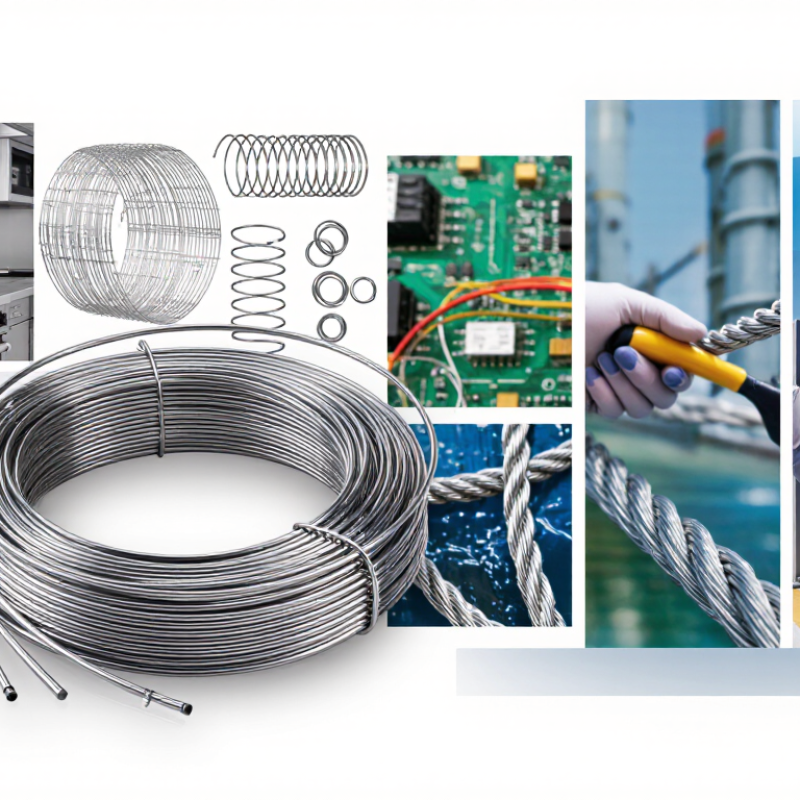
Stainless steel wire is easy to overlook, yet it supports many products people touch every day. It appears in surgical instruments, safety cables, springs, filters, fencing, cookware, and precision electronics. Its strength comes from more than appearance. Chromium creates a passive oxide layer that helps the wire resist moisture, staining, and corrosion.
Metallurgist Harry Brearley, widely recognized as a pioneer of stainless steel, reportedly said, “I discovered a steel alloy that did not rust.” The wording is simple. The engineering is not. Wire performance depends on grade, diameter, surface finish, tensile strength, and forming method. A 316 stainless steel wire may suit marine or chemical environments better than 304 wire. Spring-tempered wire can flex repeatedly, while softer annealed wire bends more easily during fabrication.
In practical work, engineers often check ASTM A580/A580M requirements, coil condition, weldability, and actual exposure conditions. A bright, polished surface may look dependable, but appearance alone proves little. Salt spray, heat, abrasion, and repeated bending can reveal weaknesses.
This matters in small details.
A dental instrument needs cleanliness and rigidity. A wire-rope strand needs controlled strength and fatigue resistance. A filter element needs stable openings under pressure. Choosing stainless steel wire is therefore a design decision, not merely a material purchase. Some applications also require testing after forming, because bending can change the wire’s behavior. That step is sometimes missed. Better specifications, traceable certificates, and experienced suppliers reduce uncertainty, although no material choice is perfect. The sections ahead examine where stainless steel wire is used and why each application demands a different balance of durability, flexibility, hygiene, and cost.
Stainless steel wire is a drawn metal product made from corrosion-resistant steel. Its defining feature is chromium content of at least 10.5%, which helps form a thin protective oxide layer. Nickel can improve ductility, while molybdenum strengthens resistance to chlorides. The final wire may be bright, matte, spring-tempered, or lightly coated. Appearance alone proves little. Surface finish and grade both matter.
Manufacturers use stainless steel wire for springs, mesh, medical instruments, fasteners, welding products, and safety cables. Fine wire can form a precise filter screen, while heavier wire supports fencing or industrial baskets. The International Stainless Steel Forum reported global stainless crude steel production of about 58.4 million tonnes in 2023. This figure does not measure wire directly, but it shows the scale of the stainless supply chain. ASTM A580/A580M also defines requirements for stainless steel wire, including dimensions, mechanical properties, and testing. Specification checks are essential. A wire that performs well outdoors may still fail near saltwater if its grade is poorly selected. My practical concern is simple: buyers often compare diameter first and environment last. That order can create avoidable failures.
Stainless steel wire is used in applications that require corrosion resistance, strength, hygiene, and durability. The chart shows representative diameter ranges commonly used for major applications; actual sizes vary by design and industry standard.
Typical diameter ranges are shown in millimeters. Fine wire is commonly used for medical and filtration products, while larger diameters are used for springs, cables, and structural components.
What Is Stainless Steel Wire Used For?
Stainless steel wire starts as molten alloy, not as a finished shiny strand. Producers cast the melt into billets or rods, then hot-roll and anneal it. Pickling removes scale from the surface. Cold drawing reduces the diameter through hardened dies, often in several passes. The wire may receive another annealing cycle for softness or higher strength. In a real plant, temperature control matters greatly. A small deviation can change the final spring response.
Classification begins with metallurgy. Austenitic grades usually provide corrosion resistance and ductility. Ferritic grades offer magnetic behavior and lower nickel dependence. Martensitic grades can reach higher hardness after heat treatment. Duplex grades combine austenitic and ferritic structures. Specifications such as ASTM A580/A580M also classify wire by grade, diameter, tensile strength, finish, and testing requirements. These details determine whether wire suits mesh, cable, medical instruments, fasteners, springs, or safety screens.
Demand reflects this broad role. World Stainless reported global stainless steel melt-shop production of about 58.4 million tonnes in 2023. That figure includes many products, but it shows the scale supporting wire supply. Engineers normally check chemistry, surface cleanliness, elongation, and coil consistency before use. A bright surface alone proves very little. This is where inexperienced buyers can misjudge quality. I have also seen specifications copied without checking the drawing condition, which can create avoidable forming problems. Tensile strength is useful, but it is never the whole story.
| Data Dimension | Classification or Process | Key Characteristics | Typical Uses | Common Reference or Selection Consideration |
|---|---|---|---|---|
| Basic Definition | Stainless steel wire | Steel wire containing at least approximately 10.5% chromium by mass, allowing a protective chromium-oxide surface film to form. | Applications requiring corrosion resistance, cleanliness, durability, or a combination of these properties. | Actual corrosion performance depends on alloy composition, surface condition, environment, temperature, and fabrication. |
| Raw Material | Stainless steel billet or wire rod | Produced from carefully controlled alloy melts that may contain chromium, nickel, molybdenum, carbon, manganese, silicon, and other alloying elements. | Provides the starting material for industrial, spring, welding, mesh, and formed-wire products. | Material chemistry is normally verified by a heat or batch certificate. |
| Manufacturing Step 1 | Melting and casting | Alloying elements are melted and refined, then the liquid steel is cast into a semi-finished form such as billet. | Creates the controlled chemical composition needed for the selected stainless steel grade. | Control of carbon, sulfur, oxygen, and alloying elements affects formability, weldability, and corrosion resistance. |
| Manufacturing Step 2 | Hot rolling into wire rod | The cast material is reheated and reduced through rolls to produce wire rod with a preliminary round section. | Used as feedstock for drawn wire, welding wire, fastener wire, and mesh wire. | Rod dimensions and surface quality influence the efficiency of later drawing operations. |
| Manufacturing Step 3 | Descaling and surface preparation | Oxide scale from hot processing is removed mechanically, chemically, or by a combination of methods. | Prepares the surface for drawing, annealing, coating, welding, or final finishing. | Pickling and passivation can restore or improve the chromium-rich passive surface after processing. |
| Manufacturing Step 4 | Cold drawing | Wire rod is pulled through dies to reduce its diameter and improve dimensional accuracy and surface finish. | Precision wire, springs, cable components, screens, fasteners, and formed parts. | Repeated drawing may be combined with intermediate annealing when further reduction or improved ductility is required. |
| Manufacturing Step 5 | Annealing | Controlled heating and cooling reduces drawing stresses and restores ductility; some stainless grades are solution annealed. | Wire that must be bent, woven, formed, or drawn again. | Annealed wire is generally more ductile; cold-worked wire is generally stronger and harder. |
| Surface Condition | Bright, annealed, pickled, or passivated | Surface descriptions indicate the appearance and treatment applied after drawing or heat treatment. | Bright wire for visible components; pickled or passivated wire for improved surface cleanliness and corrosion performance. | Surface requirements should be specified together with dimensional tolerances and cleanliness requirements. |
| Cross-Section | Round wire | The most common form, manufactured by drawing through round dies. | Springs, wire rope, mesh, screens, welding wire, safety wire, fasteners, and general fabrication. | Diameter, ovality, tensile strength, and surface condition are common purchasing requirements. |
| Cross-Section | Flat, square, rectangular, or shaped wire | Produced by specialized drawing, rolling, or forming operations to create a non-round profile. | Electrical contacts, precision springs, seals, woven screens, clips, and custom formed components. | Profile accuracy and corner condition are important when the wire is used in precision assemblies. |
| Metallurgical Family | Austenitic stainless steel | Commonly selected for excellent corrosion resistance, good ductility, and strong formability. Many grades are generally non-magnetic when fully annealed, although cold work can increase magnetic response. | Food-processing equipment, medical components, architectural wire, mesh, springs, fasteners, and marine-related hardware. | Typical examples include 304 and 316 designations; 316-type alloys are often preferred in chloride-containing environments because of molybdenum addition. |
| Metallurgical Family | Ferritic stainless steel | Chromium-based alloys with good resistance to oxidation and moderate corrosion resistance; normally magnetic and generally lower in nickel than austenitic grades. | Automotive components, appliance parts, decorative wire, and applications requiring magnetic response. | Formability and weldability vary by grade and carbon level. |
| Metallurgical Family | Martensitic stainless steel | Can be hardened by heat treatment and offers higher hardness and strength than many annealed austenitic grades. | Cutlery wire, surgical and instrument components, wear-resistant parts, shafts, and high-strength formed items. | Usually selected when hardness and strength are more important than maximum corrosion resistance. |
| Metallurgical Family | Precipitation-hardening stainless steel | Designed to achieve high strength through a combination of solution treatment, aging, and controlled alloy chemistry. | Aerospace hardware, high-strength springs, precision components, and specialized mechanical parts. | Heat-treatment condition must be stated because strength and ductility depend strongly on the aging condition. |
| Mechanical Condition | Annealed or soft condition | Higher ductility and lower strength make the wire easier to bend, weave, coil, or draw further. | Wire mesh, woven screens, deep-formed components, and manufacturing operations involving substantial deformation. | Suitable when forming performance is more important than maximum tensile strength. |
| Mechanical Condition | Cold-worked or spring temper | Cold reduction increases tensile strength, yield strength, and hardness, but normally decreases elongation. | Springs, clips, retaining rings, safety wire, cable elements, and resilient components. | The required tensile range and temper should be specified because terminology varies by standard and product type. |
| Application | Springs and resilient parts | Stainless wire provides elastic performance, fatigue resistance, and corrosion resistance when the correct grade and temper are selected. | Compression springs, extension springs, torsion springs, clips, and retaining components. | Design should consider stress level, cycle count, temperature, surface defects, and corrosive exposure. |
| Application | Wire mesh and screens | Wire can be woven or welded into openings with controlled dimensions and strong resistance to many environments. | Filtration, sieving, guarding, ventilation, food processing, mining, and architectural panels. | Important specifications include wire diameter, aperture size, weave or weld pattern, and alloy grade. |
| Application | Fasteners and safety wire | Offers strength, corrosion resistance, and reliable formability for securing or locking components. | Screws, bolts, nuts, clips, tie wire, lock wire, and maintenance hardware. | Selection depends on required strength, temperature, vibration, and exposure to moisture or chemicals. |
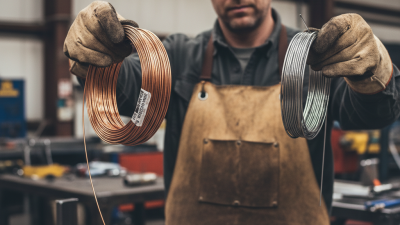
| Application | Welding and fabrication wire | Manufactured with controlled chemistry and dimensions for joining stainless steel components or depositing corrosion-resistant metal. | Gas metal arc welding, gas tungsten arc welding, fabrication, repair, and overlay operations. | Filler selection should match the base metals, service environment, welding process, and required mechanical properties. |
| Application | Medical, food, and hygienic equipment | Stainless wire can provide a cleanable surface, corrosion resistance, and suitable mechanical performance. | Medical baskets, surgical instruments, food-processing screens, conveyor components, and hygienic fixtures. | Surface finish, passivation, cleanability, traceability, and applicable regulations should be specified. |
| Quality Checks | Dimensional, mechanical, chemical, and surface inspection | Typical checks include diameter or profile, tensile strength, elongation, hardness, chemical composition, surface defects, and corrosion-related requirements. | Ensures that the finished wire meets the design and processing requirements of its intended application. | ASTM A580/A580M is a commonly used specification for stainless steel wire; the applicable edition and product requirements should always be confirmed. |

Stainless steel wire is used in springs, medical instruments, filters, fencing, marine hardware, and precision components. Its usefulness comes from a balance of strength, corrosion resistance, and dimensional stability. Chromium forms a thin passive layer on the surface. This layer helps protect the wire from moisture, oxygen, and many mild chemicals.
It stays reliable in humid workshops and salty coastal air, although it is not completely corrosion-proof. Nickel can improve toughness and forming performance, while molybdenum may increase resistance to chloride exposure.
Some stainless steel wires tolerate elevated temperatures without losing strength quickly. Others are designed for repeated bending, such as fine springs or woven mesh.
Diameter matters greatly. A thin wire bends easily, but a thicker wire carries more load. Surface finish also affects cleanliness, friction, and fatigue life. I have found that choosing only by appearance often causes avoidable failures.
Match the wire grade to the environment, load, and forming method. Check tensile strength, hardness, elongation, and temperature limits. For outdoor use, test samples near joints and cut ends. Those areas often fail first. Avoid assuming every stainless wire is suitable for welding or repeated flexing. A careful specification saves material, but real-world testing still matters.
Stainless steel wire is used where strength, cleanliness, and resistance to corrosion matter. Its main applications appear in construction, manufacturing, food processing, healthcare, and marine environments. Different grades and surface finishes perform differently, so choosing wire by appearance alone can cause problems.
In construction, stainless steel wire supports safety mesh, cable systems, reinforcement ties, and suspended fittings. It remains reliable around rain, humidity, and many urban pollutants. Manufacturers also use it for springs, filters, woven screens, and precision components.
Thin wire can form surgical instruments and medical devices, while thicker wire may secure equipment inside demanding production areas. It must meet strict dimensional and hygiene requirements.
Food processing equipment uses stainless steel wire in conveyor belts, baskets, racks, and cutting systems. Smooth surfaces help reduce residue buildup during regular cleaning. Marine applications include handrails, rigging parts, and fastening systems exposed to saltwater. Electrical and electronic industries use fine wire for shielding, grounding, and small structural parts.
Selection is not always obvious. A highly polished wire may look suitable but still fail in chloride-rich conditions. Engineers usually check tensile strength, flexibility, weldability, diameter tolerance, and corrosion exposure before approval. In real workshops, bending radius is often underestimated. That small oversight can create cracks or permanent deformation. Regular inspection still matters, even when the material is described as corrosion resistant.
Stainless steel wire is used in springs, screens, fencing, medical instruments, marine fittings, and construction supports. Choosing the right wire requires more than checking its shiny surface. Start with the working environment, expected load, and forming method.
For general indoor use, 304 stainless steel wire often provides a sensible balance of strength, corrosion resistance, and cost. Choose 316 when salt spray, moisture, or chemical exposure is expected.
Diameter affects both strength and flexibility. A thicker wire carries more load, but it may resist bending during installation. Temper matters too. Soft wire forms easily, while hard-drawn wire holds its shape better. Measure carefully.
Small details matter.
Check tensile strength, surface finish, and dimensional tolerance before ordering. A rough surface can damage moving parts or trap contaminants. If the wire will be welded, confirm its welding suitability first.
Ask for material certificates when reliability is important.
Test a short sample under realistic conditions.
It may reveal unexpected kinking, springback, or corrosion.
I have found that choosing the strongest wire is not always the best decision. Over-specification can increase cost and make assembly harder. A simple wire can be the right wire.