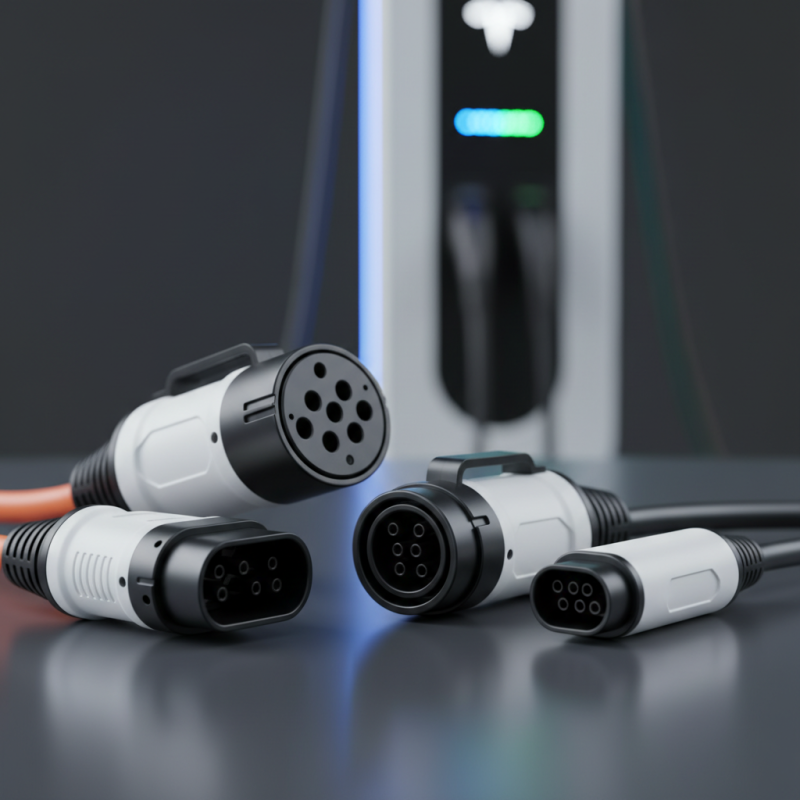
Why Choose the Right DC Charging Connector for Your Needs?
Choosing the right Dc Charging Connector is crucial for electric vehicle (EV) owners. The connector type directly impacts charging efficiency and user experience. Selecting an appropriate connector can simplify the charging process and enhance overall satisfaction.
Different connectors serve various needs. For instance, some offer faster charging capabilities. Others focus on compatibility with specific vehicle models. Understanding these differences is essential. A wrong choice may lead to frustration during charging sessions.
Many users overlook the importance of the DC Charging Connector. They may choose based on convenience rather than capability. This decision can affect charging performance. Thoughtful consideration is necessary to ensure reliability. Make informed choices for a better charging experience.
Understanding DC Charging Connectors and Their Importance
DC charging connectors play a vital role in electric vehicle (EV) charging systems. Their design and compatibility directly influence charging efficiency and safety. Understanding the different types of connectors can simplify the process and enhance the user experience. It’s crucial to match the connector to your vehicle’s charging requirements to ensure optimal performance.
**Tips:** When selecting a DC charging connector, consider the charging speed and power level needed for your EV. High power levels allow for faster charging but may require specific equipment. Not all connectors fit all vehicles, so check compatibility before purchasing.
Lastly, the quality of the connector affects its longevity and safety. Look for connectors built to withstand weather conditions and frequent use. Avoid cheap alternatives that compromise safety standards. Regular maintenance checks can also help identify wear and tear, ensuring reliability.
Why Choose the Right DC Charging Connector for Your Needs?
| Connector Type | Power Rating (kW) | Charging Speed (Miles/Hour) | Compatibility | Typical Use Case |
| CCS (Combined Charging System) | 50-350 | 100-300 | Most EVs | Fast Charging Stations |
| CHAdeMO | 50 | 70-150 | Nissan, Mitsubishi | Public Charging Points |
| GB/T (China) | 60 | 100-180 | Chinese EVs | Local Charging Stations |
| Tesla Supercharger | 120-250 | 200-300 | Tesla Vehicles | Dedicated Supercharging Network |
Types of DC Charging Connectors Available in the Market
When selecting a DC charging connector, understanding the types available is crucial. Many options exist in the market. Common types include CHAdeMO, CCS, and Tesla connectors. Each type serves different charging needs and vehicle compatibilities.
CHAdeMO connectors are often used by Japanese manufacturers. They offer fast charging capabilities, typically up to 62.5 kW. On the other hand, CCS (Combined Charging System) has become popular in Europe and North America. It allows for both AC and DC charging. This feature provides versatility, accommodating a wider range of electric vehicles.
Tesla connectors, while primarily for Tesla vehicles, have unique benefits. Their design promotes efficient charging. However, relying entirely on one type can be limiting. It is vital to assess your vehicle's compatibility. Knowing these options helps to avoid frustration at charging stations. Each connector type has its own strengths and weaknesses. Understanding these differences is a step toward enhancing your EV experience.
Types of DC Charging Connectors Available in the Market
Factors to Consider When Choosing a DC Charging Connector
Choosing the right DC charging connector is essential for electric vehicle (EV) owners. Understanding your specific needs is critical. Different connectors offer varying charging speeds and compatibility. Are you frequently on the go? A fast-charging connector might be necessary. If your use is more casual, slower charging options may suffice.
Another factor to consider is the location of charging stations. Certain connectors are more common in specific regions. This regional availability might affect your decision. Some, however, may find it limiting. Conducting thorough research can help ensure you choose wisely.
Lastly, think about future needs. The EV market is evolving rapidly. New models and technologies emerge often. A connector that suits you now might not be ideal in a few years. Anticipating these changes can save you headaches later. Reflect on your choices carefully to avoid potential pitfalls in the future.
Compatibility with Electric Vehicles and Charging Stations
Choosing the right DC charging connector is crucial for effective electric vehicle (EV) charging. Compatibility is a key factor. Different EV models and charging stations have specific connector types. For instance, standards like CCS or CHAdeMO are prevalent. It’s essential to verify which connector your vehicle supports. Mismatched connectors can lead to frustration and wasted time.
Charging infrastructure varies by region. In some areas, certain connectors are more common. It's worth researching local charging stations to ensure compatibility. Some users overlook this aspect, opting for connectors they find. This can limit charging options and lead to inconvenience.
Understanding your vehicle's requirements is vital. Not all DC connectors deliver the same charging speed. Recognizing the differences can enhance your charging experience. Be cautious of generic solutions; they may not meet all your needs. Sometimes, selecting the wrong connector could compromise your vehicle's charging efficiency. Having the right information empowers EV owners to make informed decisions.
Future Trends in DC Charging Connector Technology and Standards
In recent years, the landscape of DC charging connector technology has witnessed significant changes. As electric vehicles (EVs) become more mainstream, consumer preferences shift toward efficiency and convenience. This evolution calls for connectors that not only ensure quick charging but also maintain compatibility with various vehicle models. Emerging technologies are paving the way for higher power demands and faster charging rates, pushing industry standards forward.
Future trends indicate a potential shift toward universal connector designs. This could simplify the charging process for users. Compatibility plays a critical role here. Nevertheless, manufacturers may face challenges in aligning their products with evolving standards. Striking a balance between innovation and regulation remains complex. These changes necessitate constant updates and education within the industry, ensuring all stakeholders understand new developments.
Sustainability also shapes the future of DC charging connectors. As the focus on eco-friendly solutions rises, connectors must be made from recyclable materials. Integrating smart technology, such as user-friendly interfaces, could enhance the overall experience. Yet, implementing these advances isn't without obstacles. Companies need to prioritize interoperability while meeting sustainability goals. Embracing these trends might lead to a more efficient charging ecosystem, but it’s essential to remain adaptable and vigilant as the market evolves.