How to Choose the Best Infrared Light Device?
Choosing an Infrared Light Device starts with a practical question: what outcome are you seeking, and what evidence supports it? Devices differ in wavelength, irradiance, treatment area, and recommended session time. A bright panel may cover your back, while a compact unit may better target a knee or shoulder. The specifications matter. So does the distance between the LEDs and your skin.
Market reports show rising interest, but sales forecasts are not proof of benefit. Grand View Research estimated the global red-light therapy market at roughly US$1 billion in 2023; its projections describe market growth, not clinical effectiveness. For scientific context, photobiomodulation researcher Michael R. Hamblin wrote that it “utilizes non-ionizing forms of light sources, including lasers, LEDs, and broadband light, in the visible and infrared spectrum.” That definition helps distinguish light technologies, but it does not establish that every device or treatment claim works. Numbers matter. They vary.
A careful comparison should check the exact wavelength range, measured irradiance, safety instructions, and evidence for the intended use. Look for independent testing and clear manufacturer guidance, rather than relying on dramatic before-and-after photos. Also consider comfort: Can you maintain the recommended distance? Will the device fit your routine? A specification sheet can still leave important questions unanswered. This guide explains how to compare those details, assess claims realistically, and choose an Infrared Light Device that suits your needs without treating marketing promises as medical advice.
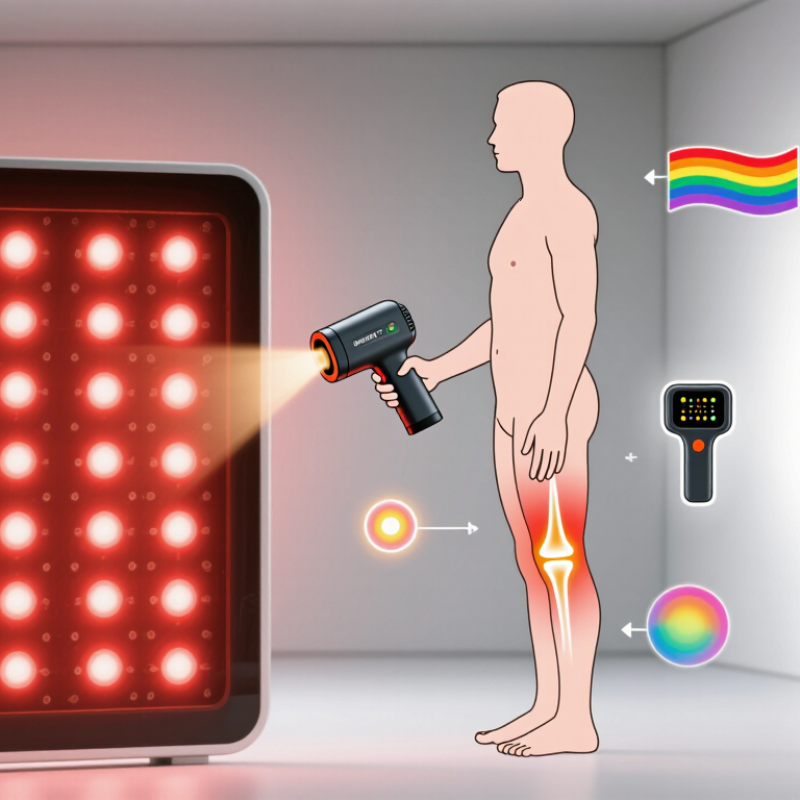
Understanding How Infrared Light Devices Work
Infrared light is electromagnetic energy just beyond visible red light. Devices deliver it through LEDs, lamps, or heated panels, but their effects depend on wavelength and design. Wavelengths matter. Near-infrared light can travel farther into tissue than visible red light, while far-infrared devices mainly warm the skin and nearby tissues. Neither description guarantees a particular health benefit.
Some light-based devices are studied for effects on cells, but results vary by condition, dose, and device. A warm feeling is not proof that light is working as intended. I still find product labels confusing; “infrared” alone tells you very little. Look for the specific wavelengths, output measurements, recommended distance, and session duration. Clear specifications make comparison easier.
Use the device as directed, and avoid staring into bright emitters. Eye precautions matter, especially with high-output equipment. If you have a health condition, take photosensitizing medication, or are considering light therapy for a medical concern, ask a qualified clinician first. Small details count. Heat, fit, and ease of use affect whether a device feels comfortable enough for consistent use, though consistency cannot replace reliable evidence.
Identifying Your Needs and Intended Use
Begin with the reason you want an infrared light device. Are you seeking general comfort, supporting a skincare routine, or following guidance from a health professional? These uses are not interchangeable. Write down the body area, how often you expect to use the device, and whether you need hands-free treatment. Be specific. A small panel may suit a desk or bedside table, while a larger one can be awkward in a cramped room. I still find convenience easy to underestimate: if setup takes ten minutes, regular use may fade.
Check the device’s wavelength information, recommended distance, session length, and eye-safety instructions. These details help you judge whether its intended use matches yours; they do not guarantee a particular result. Look for clear instructions and realistic claims, not dramatic promises. If you have a medical condition, take photosensitizing medication, or are unsure whether light exposure is appropriate, ask a qualified health professional before use. Keep the first session conservative and note how your skin feels afterward. That is not a perfect test, and discomfort should not be ignored. A device can be technically impressive and still be the wrong fit for your actual routine.
Comparing Wavelengths, Power, and Treatment Area
Choosing an infrared light device starts with its wavelength, but labels alone can be misleading. Red light, commonly around 630–660 nanometers, is generally used for more superficial tissues, while near-infrared light, often around 800–850 nanometers, can reach farther into tissue. These ranges do not guarantee a particular result. Check the device’s stated wavelengths and whether they match your intended use.
Power matters, too. Look for irradiance measurements, usually given in milliwatts per square centimeter, and note the distance at which they were measured. A high number at the surface may not describe the light reaching your skin from a practical treatment distance. Treatment area affects convenience: a small panel may suit one joint, while a larger one can cover more of your back at once. Bigger is not automatically better.
Tips: Compare measurements at the same distance. Check the recommended session time and keep the device’s instructions nearby. Start conservatively. If the specifications are vague, pause and ask the seller for clearer testing details. It can be tempting to choose the most powerful option, but comfort, coverage, and consistent use may matter more. Device guidance varies, and some details are easy to overlook.
Checking Safety Features and Usage Guidelines
When comparing infrared light devices, look beyond power claims and sleek controls. Check for clear instructions, a built-in timer, stable temperature control, and automatic shutoff where applicable. The device should state its intended use and explain any eye protection requirements. If safety information is vague, that is worth taking seriously.
Read the usage guide before your first session. Place the unit on a steady surface, keep it away from water and flammable materials, and use it only at the recommended distance and duration. A timer helps prevent accidental overuse. Start with a shorter session, especially if you have sensitive skin, and check how your body responds. More is not automatically better.
Keep your eyes protected if the instructions call for it; do not stare directly into the light. Stop if you notice unusual heat, pain, dizziness, or skin irritation. Let the device cool before moving or storing it, and inspect the cord for damage. Small details matter. I would also check whether the manual explains cleaning and maintenance, since that guidance is easy to overlook. People with a medical condition, or those using light-sensitive medication, should ask a qualified health professional before use. Safety labels can be helpful, but they do not replace careful use.
Evaluating Device Types, Quality, and Cost
Device type should fit the area you plan to use and the space available at home. A panel can cover the back or legs, but it needs a stable stand and room around it. Handheld devices are easier to store and target small areas, though sessions may take longer. Flexible masks sit close to the face, so check their fit, cleaning instructions, and eye-safety guidance. Convenience matters. A device that is awkward to position may end up unused.
Compare specifications carefully. Look for clearly stated wavelengths, treatment distance, and output measurements, rather than relying on broad claims such as “professional strength.” Published testing details and a sensible warranty can help you judge build quality. Also check for timers, ventilation, and straightforward instructions. A bright lamp is not automatically a better one. Specifications can be difficult to compare when manufacturers use different measurement methods, so some uncertainty remains.
Cost includes more than the purchase price. Consider replacement parts, return terms, warranty length, and whether the device can be used comfortably and consistently. A cheaper handheld unit may suit occasional, focused use; a larger panel may offer broader coverage but cost more and take up space. Avoid paying extra for features you cannot explain or realistically use. If you have a medical condition, take photosensitive medication, or are unsure whether light exposure is appropriate, ask a qualified health professional before buying.