How to Choose the Best Wire Mesh Weaving Machine for Your Needs?
Choosing the right wire mesh weaving machine can significantly impact your production quality and efficiency. This machine plays a crucial role in various industries, from agriculture to construction. A well-selected weaving machine boosts your output and ensures precision in the finished product.
When considering a wire mesh weaving machine, think about your specific needs. What type of mesh do you require? The machine's capabilities vary widely. Some machines excel at fine mesh, while others handle heavy-duty applications. These differences are essential when making your choice.
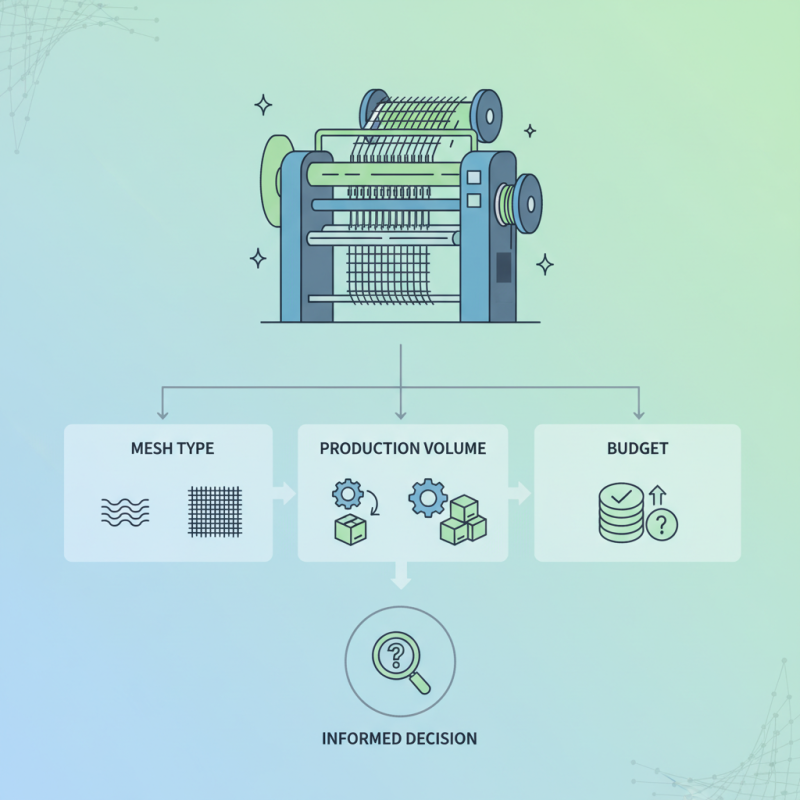
Reflect on your expected production volume and budget. A high-end machine may offer advanced features, but can you justify the investment? Balancing cost and efficiency is often a challenge. By carefully assessing your requirements, you can make a more informed decision. Take the time to explore options thoroughly; your choice can reshape your operations.
Understanding Wire Mesh Weaving Machines and Their Applications
Wire mesh weaving machines play a crucial role in various industries. They are used to produce strong, flexible mesh for different applications. Common uses include filtration, fencing, and plastering. Each machine type offers specific features tailored for unique needs. Understanding these nuances can help businesses make informed decisions.
When choosing a wire mesh weaving machine, consider your production requirements. Think about the type of wire you will use. The machine’s speed and efficiency should align with your output goals. Take note of the machine’s versatility. Can it weave different patterns? This can be critical for expanding your product range.
Tips for selecting the right machine include evaluating the technical support provided. You want to ensure you can get help when needed. Assess the machine's build quality, too. A durable option can reduce long-term costs. Test the control features; they should be intuitive and user-friendly. Don't overlook the importance of training. Even the best machine can fall short if operators lack skills. A thoughtful approach will enhance both production and quality.
Wire Mesh Weaving Machines: Production Capacity Comparison
Key Factors to Consider When Choosing a Wire Mesh Weaving Machine
When selecting a wire mesh weaving machine, several key factors must be considered. Production capacity is vital. Depending on the application, machines vary significantly. For example, a study by Market Research Future indicates that the global wire mesh market is projected to grow at a CAGR of 2.5% annually until 2027. This growth highlights the increasing demand for efficient machines capable of higher output.
The type of mesh required is another essential factor. Different applications need specific types of wire mesh, such as welded or woven varieties. For instance, the automotive sector often uses woven wire mesh for filtration purposes, while construction industries may prefer welded mesh for enhanced durability. Understanding these requirements guides the decision-making process.
Lastly, the machine's ease of operation and maintenance should not be overlooked. A complex machine can lead to increased downtime and costs. According to industry reports, operators require proper training, as 30% of machine issues stem from user error. Investing time in machine selection can significantly impact efficiency and, ultimately, profit margins.
Types of Wire Mesh Weaving Machines: Advantages and Disadvantages
When selecting a wire mesh weaving machine, it’s crucial to understand the various types available. Each type comes with its own set of advantages and disadvantages. For instance, the automatic weaving machine offers high efficiency and speed. It can produce large quantities in shorter time frames. However, the cost can be significant, and maintenance may require skilled technicians.
On the other hand, manual weaving machines are more affordable and easier to repair. They allow for greater control over the weaving process. Still, they may not keep up with large production demands. Another type is semi-automatic machines, striking a balance between the two. They save time while still being cost-effective. Yet, they may have limitations on mesh size and customization.
It's essential to reflect on your needs. Consider factors like production volume, budget, and required precision. Each type has trade-offs worth pondering. Choosing a machine that aligns with your specific priorities is key to making an informed decision. There’s no one-size-fits-all answer. Each choice demands careful consideration of your unique circumstances.
How to Choose the Best Wire Mesh Weaving Machine for Your Needs?
| Type of Machine | Advantages | Disadvantages | Best Use Case |
| Automatic Wire Mesh Weaving Machine | High production speed, reduces labor costs. | Higher initial investment, requires skilled maintenance. | Mass production of uniform wire mesh. |
| Semi-Automatic Wire Mesh Weaving Machine | Lower cost than automatic, versatile. | Moderate production speed, requires operator input. | Small to medium production runs, diverse mesh types. |
| Manual Wire Mesh Weaving Machine | Lowest cost, simple operation. | Slow production speed, labor-intensive. | Custom projects or low-volume production. |
| Custom Wire Mesh Weaving Machine | Tailored features for specific needs. | Longer lead times, potentially higher costs. | Specific applications requiring unique mesh specifications. |
Assessing Your Production Needs and Budget Constraints
When assessing your production needs and budget constraints, it’s vital to define your requirements clearly. A well-informed decision can lead to improved efficiency. Industry reports suggest that production capacity should align with your anticipated output. For instance, if you expect to manufacture 500 units daily, ensure the machine can handle that volume or more.
Budget constraints also play a significant role. The initial cost of a wire mesh weaving machine can vary widely, with some models exceeding $100,000. Upkeep costs add to your expenses. Regular maintenance can account for up to 15% of the initial investment each year. Evaluate whether your financial resources allow for such ongoing expenses.
Consider the specifications that matter most. Mesh size and wire diameter often dictate the machine's range. You may desire flexibility—but high variability can mean increased complexity and cost. Be aware that cheaper models may lack durability, affecting long-term productivity. Reflect on your priorities to avoid regrettable choices later. Your production line's success hinges on a balance between cost and capability.
Tips for Evaluating Manufacturers and After-Sales Support Options
When selecting a wire mesh weaving machine, after-sales support is crucial. A recent industry study shows that 40% of businesses face difficulties with machine maintenance and repairs. Reliable support can significantly reduce downtime. Evaluate manufacturers based on their service reputation. Check online reviews and ask for references.
Engage with potential suppliers about their support offerings. Inquire about response times for service requests. Also, consider warranty periods and availability of spare parts. Companies with solid after-sales strategies often produce higher-quality machines.
It’s worth noting that not all manufacturers are transparent about their support options. Some may promise quick service but fail to deliver. Thus, it may be beneficial to have a clear contract regarding after-sales services before any purchase is made. This step protects your interests and ensures you receive proper assistance when needed. Look for proactive support teams that understand your production needs.