How to Choose the Best Welding Wire for Your Projects?
Choosing the right welding wire can significantly affect your project outcomes. Welding expert John Miller emphasizes, “The right wire makes all the difference.” His insight highlights the importance of selecting an appropriate welding wire tailored to your specific needs.
Different projects require unique welding wires. Factors like material, thickness, and even the type of welding process dictate the best choice. For instance, MIG welding may require a different wire than TIG welding. Knowing the distinctions can enhance your results and efficiency.
Many welders overlook the significance of these details. They may choose a welding wire based solely on cost or availability. However, this can lead to inefficient welding or poor results. It's crucial to assess the project requirements closely. Doing so can prevent mistakes and save time in the long run.
Understanding the Different Types of Welding Wire Available
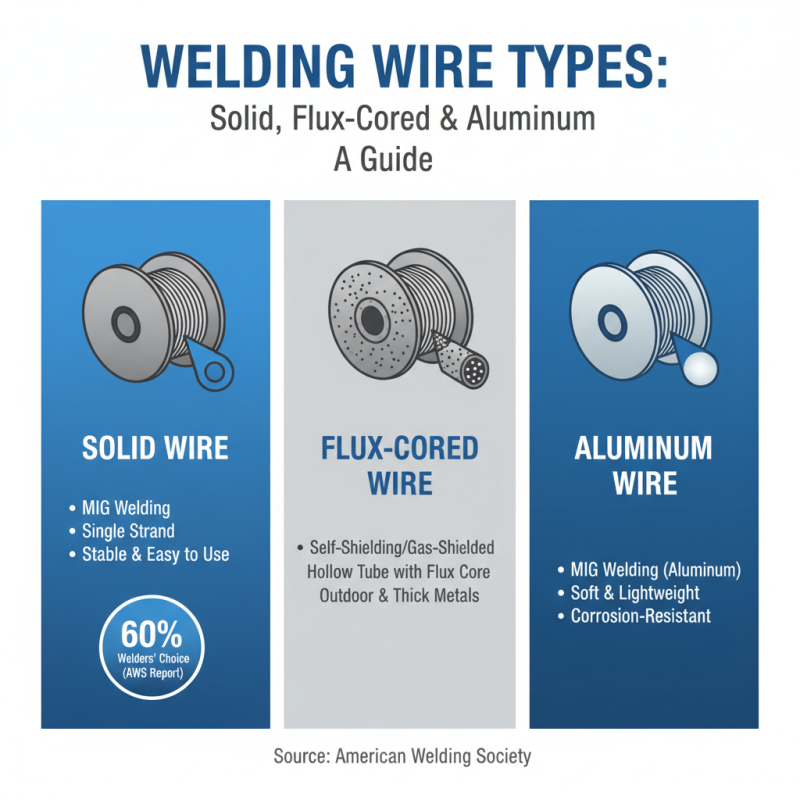
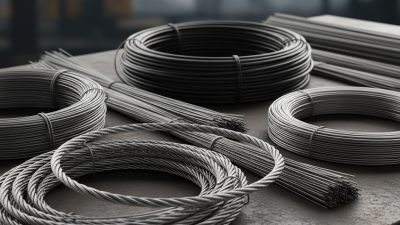
When selecting welding wire, understanding the different types available is key. There are several main categories of welding wire, including solid wire, flux-cored wire, and aluminum wire. Each type serves specific applications and has unique characteristics. Solid wire is often used in MIG welding. It consists of a single, solid strand. A report by the American Welding Society indicates that approximately 60% of welders prefer solid wire for its stability and ease of use.
Flux-cored wire, on the other hand, is a tubular wire filled with flux. It allows for better penetration and can be used in outdoor settings. Many professionals report that flux-cored wire performs well in windy conditions. According to industry data, this type accounts for around 30% of welding processes in construction. However, it may produce more spatter and requires careful technique.
Aluminum wire is also gaining popularity. It’s lightweight and resistant to corrosion, making it ideal for marine applications. Yet, users must be cautious. Aluminum welding often demands a proficient skill set. Reports suggest that the rate of defects can be higher in aluminum welding compared to steel. Overall, understanding these options can significantly influence the outcomes of your welding projects.
Factors to Consider When Selecting Welding Wire for Your Project
Choosing the right welding wire is crucial for your project's success. A few factors can guide your decision.
Material type is the first consideration. Different metals require specific wire compositions. For instance,
carbon steel generally uses ER70S-6 wire, which provides good filler strength. In contrast,
stainless steel requires wires like ER308L. Research indicates that using the right match can improve the weld quality by up to
30%.
Next, consider the wire diameter. Thinner wires, typically 0.030 inches, suit small, precise projects. Conversely, thicker wires, like
0.045 inches, work better for heavy-duty applications. A recent study revealed that 68% of welders faced issues
due to improper wire diameter. This oversight can lead to poor penetration and weak joints.
Finally, pay attention to the shielding gas mix. The gas type affects weld quality significantly. For example, a mix of
75% Argon and 25% CO2 often yields cleaner welds in gas metal arc welding. However, many beginners overlook this detail, leading to
issues such as spatter and undercutting. Monitoring these factors can enhance your welding experience and results.
Matching Welding Wire to Metal Types and Thicknesses
When selecting welding wire, understanding the metal types and their thicknesses is crucial. Different metals require specific wires for optimal bonding. For instance, carbon steel often pairs well with ER70S-6 wire, while stainless steel may require ER308L. According to the American Welding Society, the wire choice influences not just the weld quality but also the process efficiency.
Thickness also plays a significant role. Thinner materials often need a smaller diameter wire to prevent burn-through. For example, when working on sheets under 1/8 inch, use a .030-inch wire, while thicker materials, over 1/4 inch, can handle larger diameters like .045-inch.
Tips: Always test on scrap materials first. This helps identify the right settings before tackling your main project. Keep in mind that improper wire choice may lead to weak joints and uneven welds.
Be aware of the shielding gas too. It's essential for protecting the weld from contamination. Common gases include argon or a mix, depending on the metal being welded. Refining your wire selection can feel overwhelming, but it leads to better welds.
Assessing Wire Diameter and Its Impact on Welding Quality
When choosing welding wire, diameter plays a crucial role in weld quality. A smaller diameter can create a more precise and controlled weld. However, it is important to note that too small a diameter may lead to burn-through on thin materials. Conversely, larger diameters provide deeper penetration, which is beneficial for thicker metals but can cause excessive heat and warping.
Tips: Always match the wire diameter to your base material's thickness. Consider your project type. Heavy-duty work may require a thicker wire.
In practice, many welders have struggled with finding the right balance. When the wire diameter is not suited for the material, the results can be disappointing. Uneven welds or excessive spatter often arise. Experimenting with different diameters can be a learning process, revealing which works best for specific welding tasks.
Tips: Test various wire sizes on scrap pieces. Adjust your settings according to the results to improve your skills consistently. Remember, welding is both art and science. Embrace the journey of trial and error.
How to Choose the Best Welding Wire for Your Projects?
| Wire Diameter (mm) |
Wire Type |
Recommended Application |
Welding Position |
Welding Quality Impact |
| 0.6 |
Solid |
Thin Sheet Metal |
Horizontal, Vertical |
High Precision |
| 0.8 |
Flux-Cored |
General Purpose |
All Positions |
Moderate to High |
| 1.0 |
Stainless Steel |
Food Industry |
Horizontal, Overhead |
High Quality |
| 1.2 |
MIG |
Heavy Steel Fabrication |
All Positions |
Strong Joint |
| 1.6 |
Cored |
Robotic Welding |
Flat |
Very High |
Evaluating Brand Reputation and Product Quality in Welding Materials
Evaluating brand reputation is crucial when selecting welding wire for your projects. A recent industry report indicates that about 70% of welders consider brand reliability before making a purchase. This highlights the importance of choosing well-established manufacturers. However, not all popular brands guarantee the best quality.
Quality control processes vary significantly among producers. Some manufacturers conduct rigorous tests, while others cut corners. According to data, nearly 30% of welding wires tested did not meet the industry standards in terms of tensile strength and corrosion resistance. This discrepancy can lead to poor weld quality and project failures, which is frustrating for professionals.
Reputation encompasses consumer feedback and reviews. Over 80% of users rely on online reviews when choosing materials. However, many reviews can be biased or sponsored. Thus, independent assessments from welding associations can provide a more accurate picture. Engaging with the welding community can also help you discern genuine quality from mere marketing hype. Always take the time to investigate before making a choice.
Welding Wire Quality Comparison