Best Metal Mesh Types for Your Projects What to Choose?
When choosing the best metal mesh for your projects, effectiveness and design play crucial roles. Recent industry reports indicate that the metal mesh market is expected to grow annually by 4.5%. This growth highlights the increasing importance of selecting the right metal mesh type.
John Anderson, a leading expert in metal mesh technology, once stated, “The right mesh can transform your project from ordinary to extraordinary.” This emphasizes the necessity of understanding various mesh types. Each offers unique properties and applications, making informed choices essential for successful outcomes.
However, finding the best metal mesh is not always straightforward. Consider the specific needs of your project. Reflect on the balance between durability and aesthetics. It may seem simple, yet many overlook the long-term implications of their choice. Mistakes can lead to increased costs or project failures. This invites deeper consideration of what metal mesh type truly aligns with your project's goals.
Overview of Metal Mesh Types and Their Applications
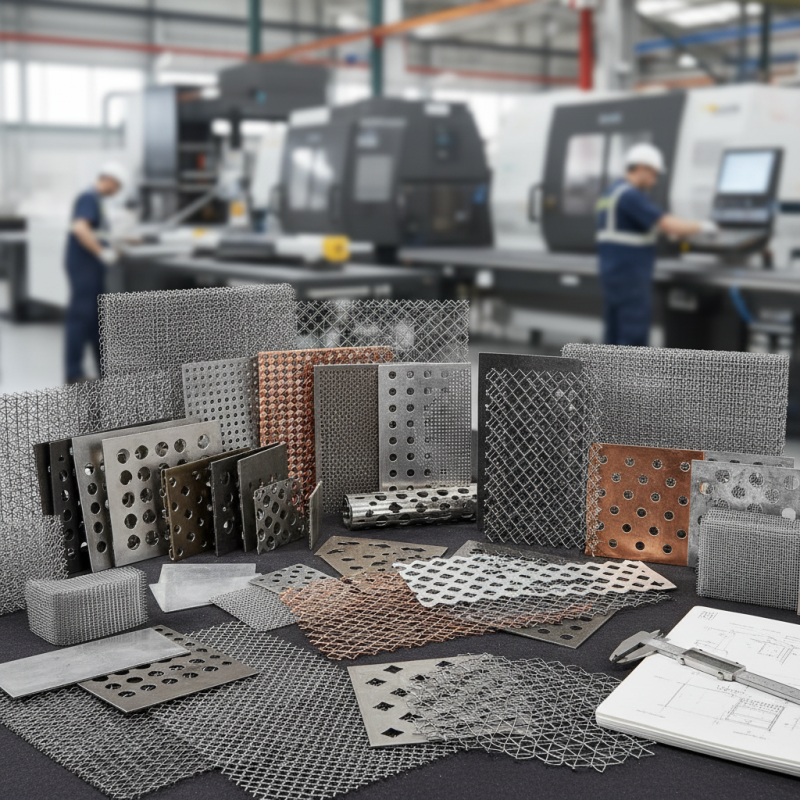
When it comes to metal mesh types, there are various options to consider. The most popular types include expanded metal, perforated sheets, and woven wire mesh. Expanded metal is made from a single sheet, cut and stretched into a mesh. This type is known for strength and durability. It's often used in flooring, safety guards, and architectural features. The design allows for good airflow while maintaining structural integrity.
Perforated sheets are flat metal plates with holes punched through them. These sheets come in various patterns and sizes. They are ideal for filtration, sound dampening, and decorative applications. Their versatility makes them a favorite in industries like automotive and food processing. Woven wire mesh, on the other hand, is created by weaving wires together. It offers great flexibility and is often used in industrial screens and barbecue grilling surfaces.
Choosing the right type may feel overwhelming. Each type serves different functions. Think about your project's specific requirements. For example, if you need strength, expanded metal might be the best choice. If aesthetics are crucial, perforated sheets or woven options could be more suitable. Reflect on how these choices can impact your project's overall success.
Best Metal Mesh Types for Your Projects - Overview of Metal Mesh Types and Their Applications
| Mesh Type |
Material |
Mesh Size (mm) |
Applications |
Advantages |
| Welded Wire Mesh |
Steel |
25 - 50 |
Fencing, reinforcement, security |
Durable, strong, resistant to deformation |
| Expanded Metal |
Aluminum, Steel |
2 - 40 |
Grills, filtration, architecture |
Lightweight, strong, versatile |
| Perforated Metal |
Stainless Steel |
1 - 20 |
Screens, HVAC applications, decorative panels |
Aesthetic appeal, lightweight, customizable |
| Chain Link Mesh |
Galvanized Steel |
50 - 70 |
Security fencing, playgrounds, tennis courts |
Cost-effective, easy to install, long-lasting |
| Braided Wire Mesh |
Stainless Steel |
0.5 - 5 |
Oil and gas filtration, machinery |
High durability, corrosion resistance, flexible |
Key Factors in Choosing the Right Metal Mesh for Your Project
When selecting the right metal mesh for your project, several factors must be considered. Material composition plays a crucial role. Stainless steel is popular for its strength and corrosion resistance. Aluminum, while lighter, may not withstand heavy loads as well. According to a recent industry report, stainless steel accounts for over 60% of all metal mesh usage in construction applications.
The size of the mesh openings also matters. Smaller openings provide better filtration but reduce airflow. Larger openings may facilitate airflow but allow dust and debris to pass through. The right balance depends on your specific needs. For instance, when using mesh in agriculture, opt for tighter openings to protect crops. However, for fencing, larger holes can be sufficient.
Installation ease is another consideration. Some meshes are easier to work with than others. Certain types require specialized tools or techniques, which can increase project costs. Unfortunately, many contractors underestimate this factor. A smooth installation can save both time and money, making it an essential aspect of your decision-making process.
Comparative Analysis of Common Metal Mesh Materials
When choosing metal mesh materials, several options stand out.
Stainless steel mesh is popular for its corrosion resistance. It’s durable and holds up well in various environments.
The surface finish adds to its appeal, providing a sleek look. However, it tends to be heavier than other options.
This could impact installation and application.
Aluminum mesh is another viable alternative. It is lightweight and offers good strength.
This makes it ideal for projects where weight is a concern. However, it may not resist corrosion as effectively.
Some applications may require additional protective coatings. Additionally, the mesh size and thickness should match your needs closely.
Sometimes, users overlook this detail, leading to undesirable outcomes.
Finally, expanded metal mesh provides a unique aesthetic while being functional.
It’s versatile, used in different industries. It offers excellent ventilation but lacks the fine filtration of woven mesh.
Depending on the project, this could be a significant factor. Therefore, it’s essential to evaluate each type carefully.
Choosing the right mesh involves balancing practicality and specific project requirements.
Maintenance and Durability Considerations for Metal Mesh
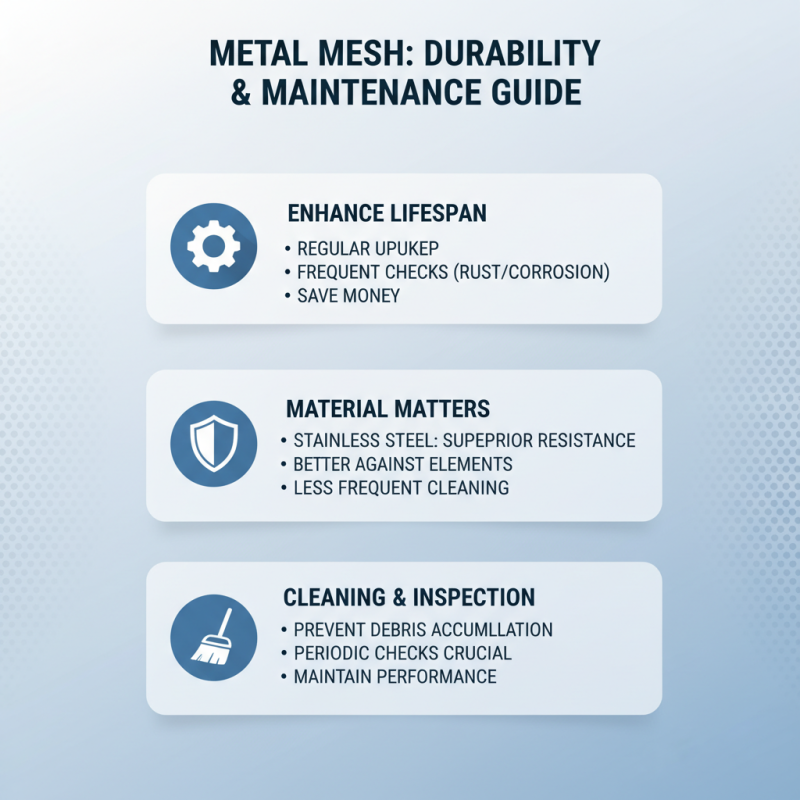
When considering metal mesh for projects, maintenance and durability are key factors. Regular upkeep can enhance the lifespan of metal mesh. Frequent checks for rust and corrosion can save money in the long run. Certain types, like stainless steel, show better resistance to the elements. They might need less frequent cleaning but can still accumulate debris.
Durability varies depending on the type of metal and the environment. For instance, aluminum mesh is lightweight and resistant to corrosion, yet it may not withstand heavy loads. On the other hand, steel mesh is robust but requires protective coatings. These coatings can wear over time, leading to potential weaknesses.
Think about your specific needs. Will the mesh face extreme weather? Or will it be indoors? Each scenario demands a unique approach to maintenance. Sometimes, a cheap option may lead to costly repairs later. Choosing the right type of metal mesh requires careful thought and reflection on these factors.
Innovative Uses of Metal Mesh in Various Industries
Metal mesh has gained traction across various industries due to its versatility and strength. In construction, for instance, it provides essential support and reinforcement. According to a recent market report, the demand for metal mesh in construction is projected to rise by 5% annually. This trend reflects the industry's need for durable materials that can withstand harsh environments while maintaining structural integrity.
In the aerospace sector, metal mesh plays a vital role in weight reduction. Engineers often use thinner meshes that can withstand high stress without adding significant weight. Recent studies indicate that using advanced metal mesh can reduce aircraft weight by up to 15%. However, the challenge remains; achieving the perfect balance between weight and strength can be difficult. Miscalculations may lead to structural failures, emphasizing the need for rigorous testing and validation.
Moreover, the automotive industry increasingly incorporates metal mesh in various components. For example, many vehicles utilize metal mesh in filters and safety barriers. Data shows that this could enhance both efficiency and safety. But the process is not without obstacles. The precision required in fabrication is often challenging to achieve. This requires continuous refinement of techniques and a commitment to innovation. As industries explore new applications, the potential for metal mesh seems boundless but fraught with complexities.
Metal Mesh Types and Their Applications